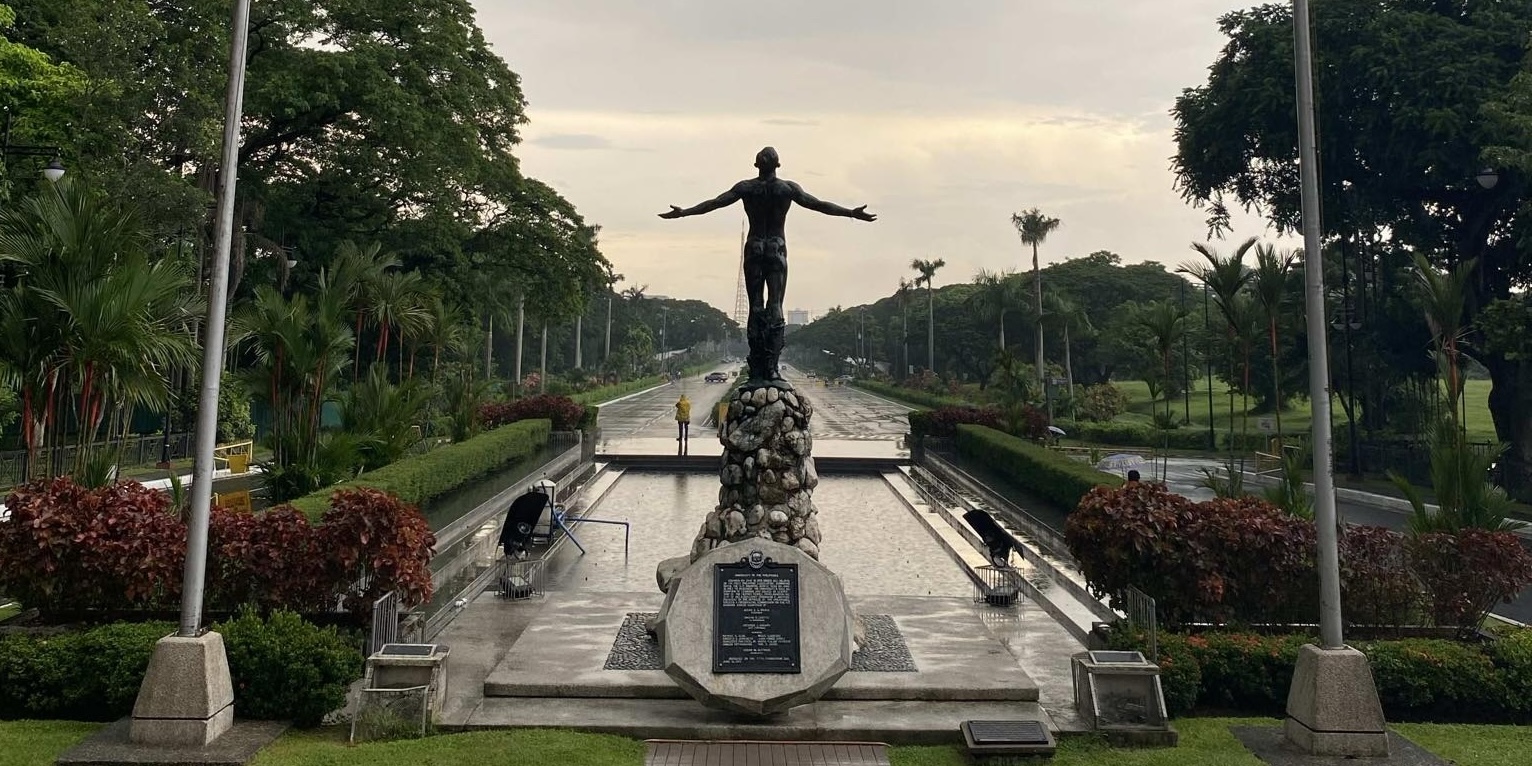
UP got a P2-billion cut this year. The culprit? Infra projects.
The University of the Philippines (UP) experienced a P2-billion budget cut this year.
While UP’s funding for its employees and office expenses increased, the government’s endowment to the national university still decreased due to a smaller infrastructure spending.
The state university will only receive P22,695,748,000 this year, compared to P24,771,903,000 last year. This is UP’s highest budget cut ever in the post-1986 EDSA Revolution era.
Overall look
The university’s current operating expenditures (COE) has still increased. The COE is the sum of the personnel expenses (PS) and the maintenance and other operating expenses (MOOE). This means that the government has increased subsidies relating to salaries and other compensation, as well as funds to pay UP’s utility bills, repairs, and maintenance costs.
Infrastructure spending, however, took a deep cut as Congress only allocated P431 million for capital outlays (CO) compared with P3 billion last year.
Generally, infrastructure programs are funded only once, unless a project is multi-year or has various phases to be done across years. In UP’s case, most of its projects are one-off and are expected to be spent within a year.
UP’s meager infrastructure budget (capital outlays) is nothing new. Usually, the UP administration proposes multi-billion construction programs and equipment purchases, only to be slashed by the Department of Budget and Management (DBM) and Congress. This, in turn, forces UP to shelf its ambitious programs, at least for now.
On a related note, infrastructure projects may also implemented by the Department of Public Works and Highways (DPWH). These projects need not be funded under UP’s budget. If this is the case, UP usually executes an agreement with DPWH, including where to get the money to fund those projects.
Disparity across campuses
The Philippine General Hospital (PGH), which is operated by UP, got the lion’s share of the funding for local projects. PGH’s medical assistance for indigent patients got P550 billion, although this still amount is lower than 2024’s P633 billion.
Quite interestingly, the National College of Public Administration and Governance alone will receive some P127 million for programs within the college and the newly created Governance Reform, Innovation and Transformation Research Laboratories.
Among the notable infrastructure programs for UP approved by Congress are:
- Restoration and renovation of Lara Hall G/F and 2/F, UP Manila (P64.7 million)
- TVUP, UP System (P20 million)
- Acquisition of lot and construction of building for the Antique Campus, UP Visayas (P35 million)
- Construction of UP New Clark City, Phase 2, UP System (P20 million)
- Completion of dormitory for graduate students, UP Los Baños, (P20 million)
Notably, no local project for UP Baguio was funded in the 2025 UP budget.
Measly increase
Another metric of looking at UP’s budget is by dissecting the funding for its core functions. Per the UP Charter, UP’s five core programs are: higher education (undergraduate), advanced education (graduate university), research, public service, and hospital services (the PGH).
The funding across all five programs have increased this year. In fact, there’s been a net increase of P52 million for the five programs combined.
However, the numbers are unencouraging when compared year-on-year.
The biggest gainer is the advanced education program, which got a 10.8-percentage increase in funding this year. But for the rest? They only got a single-digit (or less) increase:
- Higher education (+1.8%)
- Medical services (+1.1%)
- Extension services (+0.65%)
- Research (0.22%)
Taking account inflation, these amounts have actually decreased. The average inflation rate from January to October 2024 was 3.3 percent. Overall, funding for those core programs only increased by 2.3 points–lower than the average inflation rate for 2024. Despite measly increases, UP was still, actually, shortchanged.