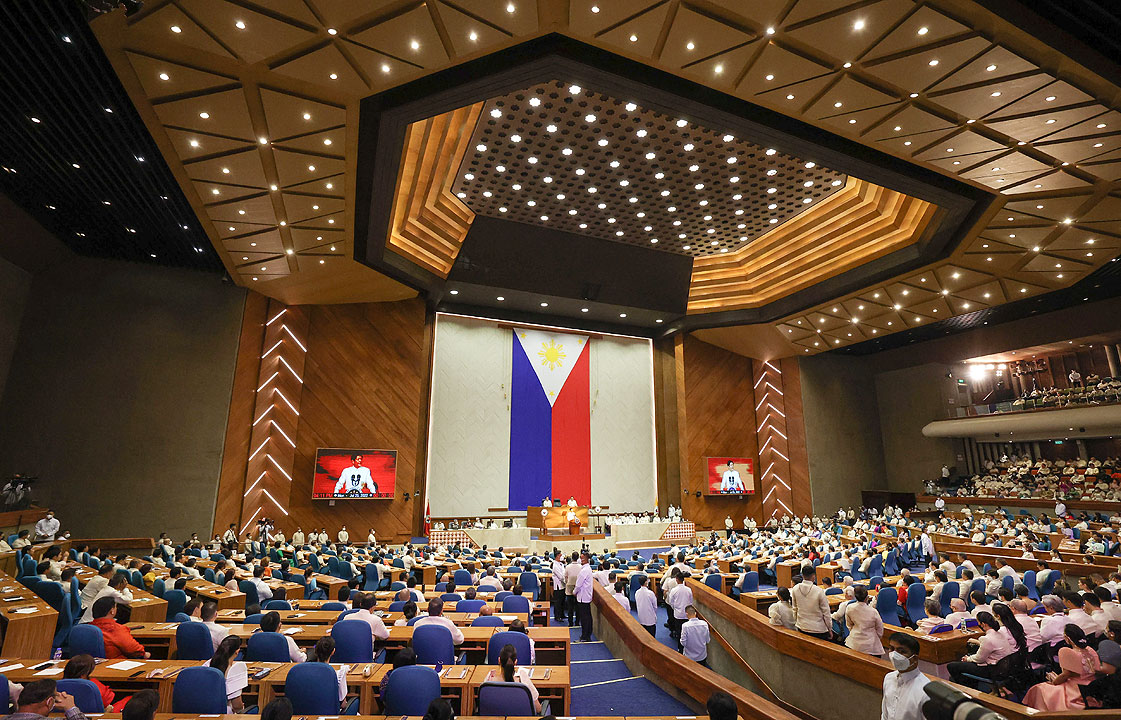
A ‘day’ in Congress isn’t what it seems
For most folks, our day consists of waking up, grabbing breakfast, leaving the house for work or school, enduring the commute back home, having dinner, and, finally, having a good night’s sleep.
But Congress’s characterization of a day is different. This peculiarity may be important in the impeachment trial of Vice President Sara Duterte.
Let’s backtrack a little.
What happened before
There were four impeachment complaints against the vice president:
- First complaint endorsed by AKBAYAN Rep. Cendaña (Dec. 2, 2024)
- Second complaint endorsed by the Makabayan Bloc (Dec. 4, 2024)
- Third complaint endorsed by Reps. Bordado and Colada (Dec. 19, 2024)
- Fourth complaint endorsed by at least one-third of the members of the House of Representatives (Feb. 5, 2025)
Only the fourth complaint was transmitted to the Senate as the Articles of Impeachment, in accordance with the fast-track procedure set forth in the constitution.1 However, the vice-president assails the validity of the fourth complaint because the constitution also bars the initiation of an impeachment proceeding against the same official more than once in a year (the so-called one-year ban).2
The veep’s position
Duterte’s legal theory goes like this: The fourth impeachment complaint is already barred by the one-year ban because the House of Representatives did not act on the first, second, and third complaints. In the vice-president’s words, the House deliberately “froze” those three complaints.
At its core, Duterte wants the one-year bar to run from the day of the filing of the first impeachment complaint, i.e, from Dec. 2, 2024. This, then, renders void the fourth impeachment complaint pending in the Senate.
However, the constitution imposes a timeline within which the House must act on the complaint. Specifically, the impeachment complaint must be placed in the House’s agenda within 10 “session days” from its endorsement by a member.
Simply put, the House should’ve acted on the complaints within 10 session days from its filing, i.e., from Dec. 2; Dec. 4; Dec. 19. The vice-president posits that the deliberate freezing of the complaints constituted a circumvention of the 10 session day-rule, in effect, preventing the one year-bar from running.
What’s a session day?
So, an important question now is: Did the House indeed “freeze” the three complaints? Here is where the importance of a “day” in Congress comes in.
First things first: The constitution did not pertain to a calendar day. Hence, the impeachment complaints weren’t required to be acted by the House within 10 days in a strict sense.
The term “session day” appears five times in the constitution: the first, as a deadline for the Commission on Appointments to act on nominations (it must act on a nomination within 30 session days), while the rest pertain to impeachment proceedings.
Let’s turn to what the House Rules say. Under Rule XI of the House Rules of the 19th Congress, a session begins with a call to order, which means banging the House’s gavel to signify the start of its session. It then continues to be in session–only being interrupted by suspension or recess–until its adjournment.
We can deduce, then, that a “session day” is the time spanning from the House being called to order until its adjournment. In practice, a “day” in the House of Representatives runs from its convening at 3 p.m. until its adjournment until well into the evening once it completes its business.
However–and here’s where it gets tricky–the House can choose not to adjourn at all! Suspension and recess are also moments where the House isn’t doing anything, but is technically in session. The House is in session, but the lawmakers aren’t transacting business.
Moreover, another consideration in the computation of session days are the days in which Congress doesn’t meet (the days that your lawmakers get to have a vacation). For the relevant period in our discussion, Congress adjourned on Dec. 18, 2024 and convened again on Jan. 13, 2025.
In summary: A session day is from call to order to adjournment. Recess and suspensions are not counted.
Let’s compute
The House claims that it included in its agenda the four impeachment complaints on Feb. 5, 2025. Hence, we count Feb. 5, 2025 as the 10th session day.
| No. | Session Day | Calendar Day/s | Called to Order | Suspension/s | Adjourned |
|---|---|---|---|---|---|
| 10 | Feb. 3, 2025 | Feb. 3–5 | Feb. 3, 3 p.m. | Feb. 3, 9:24 p.m.–Feb. 4, 3 p.m. Feb. 4, 11:01 p.m.–Feb. 5, 3 p.m. |
Feb. 5, 7:27 p.m. |
| 9 | Jan. 27, 2025 | Jan. 27–29 | Jan. 27, 3 p.m. | Jan. 27, 8:17 p.m.–Jan. 28, 3 p.m. | Jan. 29, 2:17 a.m. |
| 8 | Jan. 22, 2025 | Jan. 22 | Jan. 22, 3 p.m. | - | Jan. 22, 6:10 p.m. |
| 7 | Jan. 21, 2025 | Jan. 21 | Jan. 21, 3 p.m. | - | Jan. 21, 5 p.m. |
| 6 | Jan. 20, 2025 | Jan. 20 | Jan. 20, 3 p.m. | - | Jan. 21, 6:16 p.m. |
| 5 | Jan. 14, 2025 | Jan. 14–15 | Jan. 14, 3 p.m. | Jan. 14, 4:59 p.m.–Jan. 15, 3 p.m. | Jan. 15, 5:09 p.m. |
| 4 | Jan. 13, 2025 | Jan. 13 | Jan. 13, 3 p.m. | - | Jan. 13, 5:39 p.m. |
| 3 | Dec. 16, 2024 | Dec. 16–18 | Dec. 16, 3 p.m. | Dec. 16, 5:13 p.m.–Dec. 17, 3 p.m. Dec. 17, 5:55 p.m.–Dec. 18, 3 p.m. |
Dec. 18, 7:24 p.m. |
| 2 | Dec. 9, 2024 | Dec. 9–11 | Dec. 9, 3 p.m. | Dec. 9, 7:27 p.m.–Dec. 10, 3 p.m. Dec. 10, 5:20 p.m.–Dec. 11, 3 p.m. |
Dec. 11, 7:35 p.m. |
| 1 | Dec. 3, 2024 | Dec. 3–4 | Dec. 3, 3 p.m. | Dec. 3, 5:34 p.m.–Dec. 4, 3 p.m. | Dec. 4, 4:13 p.m. |
| 0 | Dec. 2, 2024 | Dec. 2 | Dec. 2, 3 p.m. | - | Dec. 2, 6:35 p.m. |
Indeed, there were 10 session days at most (the first day excluded, the last day included in counting)! The first complaint was referred exactly 10 session days from its filing; the second complaint took nine session days; and the third complaint took seven session days. The complaints were all filed within the constitutional timeline!
As Deschler’s Precedents explained:
Congress makes a distinction between regular calendar days and legislative days. Legislative days do not necessarily correspond to calendar days. A legislative day begins when the House convenes at the previously–determined time and the Chair calls the House to order. The legislative day ends when the House adjourns (most often by motion from the floor). Such adjournment may take place on a different calendar day—for example, if the House were to adjourn after midnight on the day it convenes. Thus, a single legislative day may span two or more calendar days. A mere recess of the House does not end the legislative day, and the House has used recess authority to continue a single legislative day across a number of calendar days.3
Because the House complied with the 10 session day-rule, the vice-president’s “freezing” argument falls. Hence, using her own theory, the House has not initiated the first three complaints prior to the fourth complaint. Therefore, the one-year bar does not apply against the fourth impeachment complaint now pending in the Senate.