The president has lost control of the public coffers. Just look at the 2025 budget.
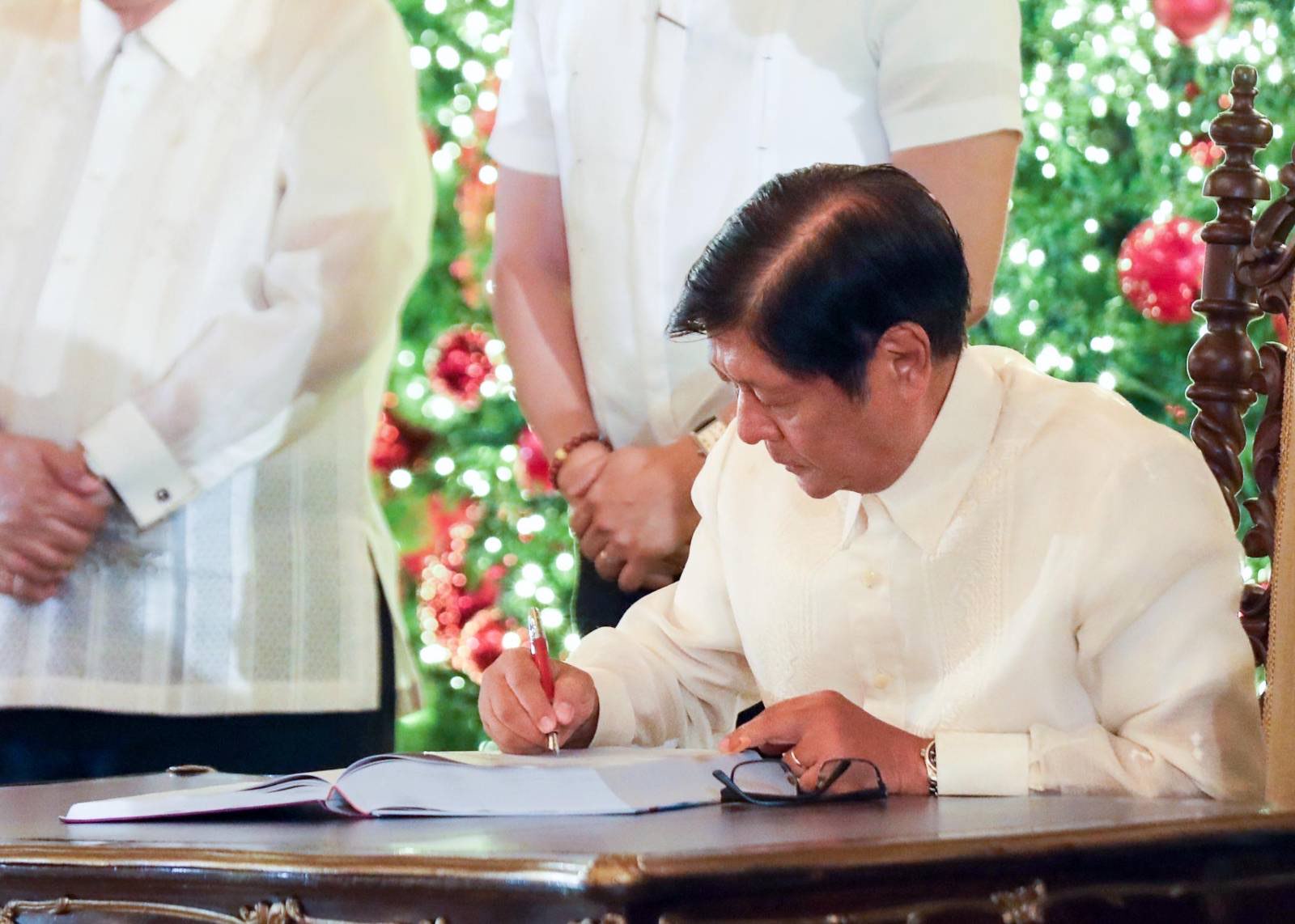
President Ferdinand Marcos Jr. signed the 2025 general appropriations act (GAA) last Monday. Much condemnation of the budget bill has been generated over the insertion of lawmakers’ pet projects, the exponential increase of the unappropriated expenditures (UA), and the institutionalization of “ayuda” as an election war chest.
The Department of Budget and Management (DBM) has yet to publish the full text of the GAA. However, the president’s vetoes have already been publicized. Of the P6.326-trillion spending package, Marcos vetoed items worth P194 million. In general, they were infrastructure projects (P26 billion), and UA (P168 billion).
Meanwhile, Marcos placed the controversial ayuda program, Ayuda sa Kapos ang Kita Program (AKAP), under “conditional implementation.” Hence, AKAP funds will only be disbursed following the creation of an implementing guidelines by the Departments of Labor and Employment, Social Work and Development, and the National Economic and Development Authority.
AKAP is a one-time cash payment (P5,000) to minimum wage earners falling under the category of low income that were severely affected by the rising inflation. The brainchild of the project is the president’s cousin, Speaker Martin Romualdez.
While the president vetoed certain items and placed others under “conditional implementation,” the GAA remains riddled with priorities that lawmakers have inserted behind closed doors.
The myth of ‘conditional implementation’
The GAA is a law. Notwithstanding Marcos’s posturing that he will place the AKAP funds, among others, under conditional implementation, funds from the Treasury have already been set aside for Speaker Romualdez’s political–not economic–ayuda.
Of course, direct cash aid for low-income Filipino workers is a brilliant policy. AKAP, however, is far from it. It is a badly worked policy–a representation of patronage politics and clientelism under the guise of ayuda.
Marcos’s conditional implementation of AKAP only routes the funds through a longer, winding path, but with the end game still the same: an election year ayuda from your congressman.
In the case of PHILCONSA v. Enriquez (G.R. 113105, August 19, 1994), the Supreme Court characterized the conditional implementation of a budgetary item as a mere exercise of the president’s duty under the faithful execution clause (that the laws be faithfully executed). Conditional implementation is a cosmetic change that does not alter the budget law itself.
To stress, the joint administrative guidelines over AKAP could just delay the project’s rollout, but AKAP will still be implemented. The basic fact remains that the GAA will allow the government to spend billions over an untargeted and patronage-based ayuda.
The smokescreen of the UA veto
Marcos, to his credit, acknowledged in his veto message that “expenditures should generally be within the parameters of programmed resources as envisioned by our fiscal planners.”
The DBM explains the difference between programmed and unprogrammed appropriations in this wise:
Programmed appropriations are appropriations with definite/identified funding as of the time the budget is prepared while unprogrammed appropriations are those which provide standby authority to incur additional agency obligations for priority programs or projects when revenue collection exceed targets, and when additional grants or foreign funds are generated.
In other words, UA projects or items will only be funded and implemented once money becomes available after the GAA is already enacted.
For instance, the conditional cash aid program, Pantawid Pamilyang Pilipino Program (4Ps), was given P50 billion under UA. Hence, 4Ps’s P50-billion budgetary requirement will only be implemented when the government’s revenue is higher-than-usual, or when additional grants or foreign funds come in. (This has been vetoed by the president.)
UA is there because the government may not have enough money, for now, to fund all projects, but it may have extra funds in the future. Remember that the constitution requires a law to spend public funds–the UA is essentially a standby Congressional authorization once funds become available.
The problem with vetoing the UA is that it serves no practical effect. The president’s veto neither saves government funds, nor cancels the pork barrel earmarks by lawmakers. Marcos’s veto was akin to canceling a wish list.
A GAA without guardrails
The annual spending law is the only legislation that can be initiated exclusively by the president and is bound by constitutional and statutory parameters. Being an appropriations bill, it is also subject to the president’s line-item veto, which is thought of as part of the give-and-take between Congress and the president over the budget.
In essence, the GAA is a shared policy enactment by the president and Congress. The president’s vision for his six-year term is enshrined in the GAAs, while the lawmakers propose programs that are needed by their constituents. The president looks at the forest, while lawmakers see the trees. Ideally.
But for years now, we have seen a consistent erosion of this shared fiscal discipline between our political branches. On one hand, the president crafts the budget according to his agenda, while Congress, on the other hand, tries to bring home big-ticket projects for their districts, usually through infrastructure and social services. It was always a tug-of-war that the president and Congress had to hash out. It was an admission of the potency of the budget as a political weapon to be wielded, especially during election years.
We would like to see a budget that is people-centric, not politician-centric. Realpolitik, however, cannot be denied. Year after year, there has always been an imprudent use of public funds. Unfortunately, the 2025 GAA has taken this imprudence to an extreme. Congress and the president have razed the forest to ashes.
This year’s budget defunded 4Ps and PhilHealth and slashed the education budget just to cater to lawmakers’ 2025 electoral plans. The lawmakers’ self-serving desires were complemented by the executive’s incompetence and acquiescence. The product is a budget that spends the people’s hard-earned money but fails to address their most pressing needs.
The perversion of the budget process through the confidential bicameral conference committee, the prioritization of pork over policies as gleaned by the inflated UA, and the misappropriation of priorities are the centerpiece of the 2025 budget.
In the end, Marcos was cornered by lawmakers to approve the problematic GAA. Maybe, the president was afraid of picking fights against Congressional allies–his cousin and son included–in an election year.