Thesis acknowledgements
Note: This acknowledgement appeared originally on my undergraduate thesis manuscript.
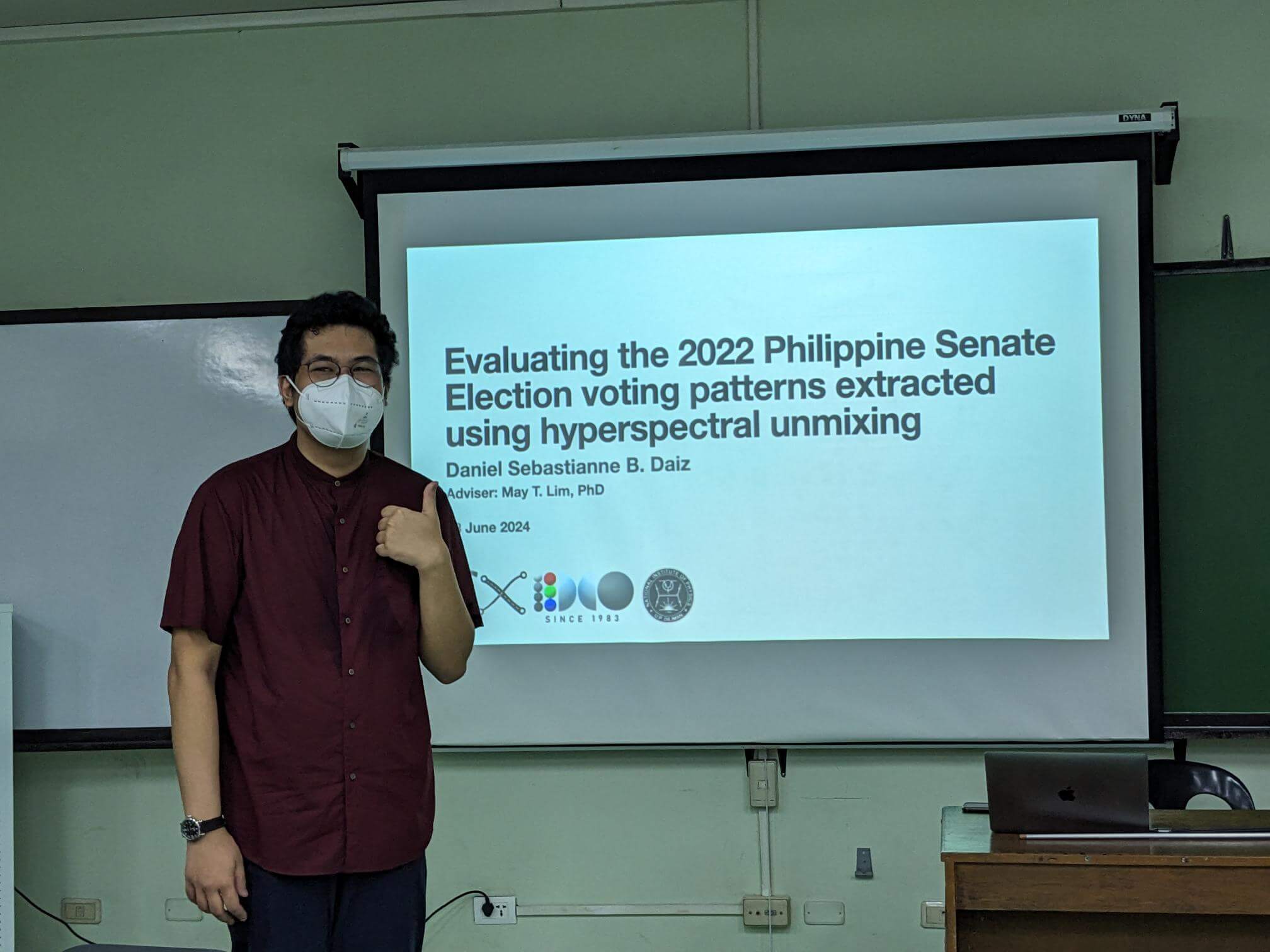
The making of this study has encountered a lot of detours, delays, and dismays. When I entered the Complex Systems (CX) Team of the Instrumentation Physics Laboratory (IPL) in September 2021, I dreamed to do big things. With the mentoring and resources attached to a research laboratory, the only thing that could hinder my doing-of-science is myself. It doesn’t help to be idealistic, anyway. After all, the entirety of science, as we know it, began as an idea or an imagination.
But for the most part of my undergraduate years, the pandemic has been a limiting factor. During my first year, I imagined myself that one day, I’ll be able to use my own RFID card to enter the institute’s research wing, and research on topics that are arguably unorthodox in what we perceive physics to be. Yet the COVID-19 pandemic reduced those ideations into email exchanges, Microsoft Teams meetings, and the occasional virtual tours or photographs of CXTeam’s home in the research wing.
The scientist cannot be decoupled from the world they are in. We don’t exist in a vacuum. To do so is to abrogate our near-immaculate belief to the values of intellectual inquiry. When injustices are normalized, history is brazenly rewritten, and tyrants get away with impunity, the scientist cannot ignore these and hide under the false premise that science is apolitical, ahistorical, and apathetic. Within the context of the pandemic, we’ve been told to act as if everything is in normalcy, that we could go on with our daily lives despite the killings, illegal arrests, and botched pandemic response. Outside the institute is a world on fire, a country in disarray, and a university under siege.
Those social realities rang loud. And it rang loud enough for me to take cognizance and action. My role as a reporter for the Philippine Collegian forced me to encounter those head-on, and my training as a future scientist allowed me to report stories with the same rigor of the scientific process. My eventual editorship of the Collegian during my supposedly fourth year was the detour of this study. The role was a full-time responsibility, having to manage a newsroom that operates 24 hours a day, seven days a week, and release a 40-page magazine every end of the month. Our time is finite, our energy is only finite. It was a conscious decision that I took myself to recalibrate my priorities.
But we are here. We saw through the end of it.
I extend my endless gratitude for my research adviser, May T. Lim, for her enduring patience, even when more than a few of our research meetings were just debugging sessions, and discussing trivial topics that I should know already. Your mentoring has imparted to me that physics can be a force for good, beyond the academia–that what we do inside the laboratory can, and must, be for the betterment of society. And to my seminar panelists, Jeric V. Garrido and Jayson P. Cabanilla, I thank you for your questions and comments which undeniably made this paper better.
Indeed, it is through common and mutual care for the others that marks a community–CXTeam, for example. To paraphrase a famous adage, it takes an entire research laboratory to raise a scientist. To CXTeam–particularly our senior members, Chester, Louie, Kenneth, and Kelvin–thank you for the life hacks, the skill sharing sessions, and for making the learning curve less steep. To my batch mates in the Team, Lorenzo and Josoel, I deeply appreciate your moral support within and beyond our research works. I know we will reach great things, at our own pace. Likewise, to IPL, especially my batch mates Christene, Richmond, Abdel, Geuel, Linus, Nick, and Marion, your presence never fails to lighten the heavy. Certainly, the arduous path toward finishing this research has been less challenging with your friendship and presence.
It is really those closest to us who we can share our burdens, in the hopes that it could become lighter. To Angela and Theo, thank you for being a willing sounding board of ideas–both good and bad. Life, in general, would be much worse if not for your good humor, encouragement, warnings, and your staunch belief that a tower or two of cheap alcohol and some badly sang Taylor Swift songs can make a situation incrementally better. To Jill, I appreciate your endless pestering that of many “you-can-do-its.” And while you may have not heeded my plea to enter graduate school, I’m certain you’ll be a great doctor. You can do it, too, because we always do. To Karen, thank you for the tireless encouragement, companionship, and endless inspiration. Thank you for always picking me up whenever I stumble across my research. You have been an invaluable friend, confidant and partner throughout the making of this work.
To my family, who are hundreds of kilometers away, thank you for always checking up on me. This work is a testament of your commitment to my education. For Fidel Nemenzo and Marivic Raquiza, thank you for being my sort of acting parents here. Your advice and guidance–research or otherwise–are deeply appreciated.
Finally, I thank the Philippine Collegian in molding me to be the scientist I am now. To my past editors, Richard, Kim, Sam, Polynne, Bei, Marvs, Sheila, and Bea, thank you for your guidance, not just in writing, but also for constantly reminding me of the deep importance of the things we do. To my Editorial Board, Gretle, Venus, Frenzel, thank you for sticking through the end, despite many hardships along the way. Know that your place in the publication’s history is already secure. To my colleagues in the current board, our chief, Rona, Sean and Andie, I extend my gratitude for your endless understanding of my situation this term. Finally, to my team, the Collegian news section, it has been one hell of a ride. Reg, Vyan, Xean, Dean, and Euni, please continue and improve on the work that we have all started. It’s an immense challenge, but I am completely assured that all of you can take on the task.
Always, for the Filipino people.